
Our Bell Labs Heritage
Our Bell Labs Heritage
“Our heritage is AT&T and Lucent Bell Laboratories Research and Development and Nokia Bell Labs Research. In the Lightwave Subsystem Research Department, Dr. Robert Tench and Dr. Jonathan Nagel both had the privilege of working as Members of Technical Staff for Dr. Kinichiro Ogawa. Dr. Ogawa was responsible for development and manufacture of the revolutionary FT-Series G lightwave regenerator at 1.7 Gb/s for AT&T Network Systems in 1985-1990. He then became a Department Head in the AT&T and Lucent Bell Laboratories Lightwave Subsystems Research Department from 1990-1998 where he championed the research and development of 10 Gb/s and 40 Gb/s line rate DWDM lightwave systems. Dr. Ogawa became a Fellow of the IEEE in 1990. in recognition of his fundamental contributions to the research and development of revolutionary, extremely high bit rate lightwave systems and networks.”
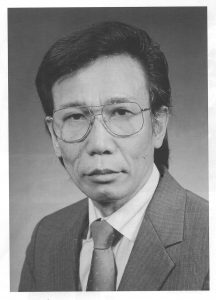
“Article by Dr. Richard G. Smith, Bell Labs Director, from the book “A Man in Motion: Memories and Achievements of Dr. Kinichiro Ogawa”, privately published in Japan in 1999
Kinichiro Ogawa (1942—1999): A Remembrance from His Friends at Bell Labs
“Kinichiro Ogawa was a unique person, a gifted engineer with wonderful insight and a caring person, especially to his group and his family. Bell Laboratories was fortunate that he chose to join the organization and, along with the telecommunications industry, benefited greatly from his many contributions to the field of optical fiber telecommunications.
Kinichiro joined the Bell Laboratories Research area in 1976 and moved into the Transmission System Development area in 1982 where he was responsible for the development of the regenerators for the 417 Mb/s system. In this assignment he demonstrated the determination to develop a world-class product and to satisfy his customer. He was demanding of his suppliers as well as his people, keeping everyone on their toes while meeting his commitments.
His greatest challenge came when AT&T decided to upgrade its network to 1.7 Gb/s in 1986, a time when distributed feedback lasers were in limited supply. Kinichiro, on the basis of his earlier work, convinced others that fabry perot lasers could accomplish the job even though there were many doubters. His insight proved correct and AT&T was able to implement a massive upgrade of their network using this technology.
As a newly appointed Department Head Kinichiro led a small group of scientists and engineers in the development of technology for Coherent Optical Communications which was subsequently used in a field trial over installed fiber. This approach of developing field-ready hardware was one of his signature strengths, setting the stage for future successes.
Following his work in coherent systems, Kinichiro set out to demonstrate the capability of systems operating at 10 Gb/s and 40 Gb/s. At the time he began this work many doubted that higher line rates were necessary. In pursuing this work Kinichiro demonstrated another of his strengths—the determination to follow his instincts and pursue his goal even if others felt he was wrong. As in most of his work, his instincts proved to be correct and higher bit rate systems are being developed worldwide.
Kinichiro could be very demanding of himself and of his people. Often this can have negative consequences. However, he was able to do it in such a way that his people accepted the challenges he gave them, and with fierce loyalty to Kinichiro, they responded with outstanding results. His ability to build and motivate a group and to maintain its morale was another of his great strengths.
Throughout his career, Kinichiro strove for perfection in all that he did, and nearly always succeeded. His work in developing the 417 Mb/s and 1.7 Gb/s regenerators on schedule allowed AT&T to meet its commitment to upgrade its long distance system. When production problems occurred at the factory he and his people responded, ensuring that the highest quality product was shipped. If a problem occurred in the field he responded to understand and fix the problem. Kinichiro took full responsibility for his work and did everything possible to ensure that the equipment worked as the customer expected.
Kinichiro did many other things above and beyond his technical contributions. He worked very closely with his Lucent and Japanese colleagues to ensure that state-of-the-art device technology was available worldwide. He worked as an emissary between Lucent and NTT to promote cooperation between the two companies in several areas of advanced technology. Many AT&T and Lucent executives sought out his advice on matters pertaining to dealings with Japanese companies and on many occasions, he would accompany them on visits to Japan where he would introduce them to their Japanese counterparts. He also gave freely of his time to the IEEE Communications Society where he served the technical community through his representation on numerous committees.
We are all saddened by the loss of a good friend and colleague. He was still young and had a strong belief in the potential of optical fiber communications and the enthusiasm to pursue his dreams. Kinichiro was a unique and respected member of the technical community at Lucent and in his homeland of Japan. We will miss him, not only for his technical prowess but also for his many great qualities. He was an inspiration to all of us.”
Our Wide Industrial Heritage
-AT&T Microelectronics
-Agere Systems
-Johns Hopkins University
-The National Security Agency
-Red Sky Systems
-Terraworx
-SAIC International